


Official Statements for the Record for the Jan. 14, 2026 Senate Judiciary Committee Hearing
- No One Left Behind

- Jan 13
- 15 min read

STATEMENT FOR THE RECORD
Andrew Sullivan
Executive Director, No One Left Behind
SENATE JUDICIARY COMMITTEE,
SUBCOMMITTEES ON BORDER SECURITY AND IMMIGRATION AND ON CRIME AND COUNTERTERRORISM
“Biden’s Afghan Parolee Program – A Trojan Horse with Flawed Vetting and Deadly Consequences”
January 14, 2026
Chairs Cornyn and Hawley, Ranking Members Padilla and Durbin, and Members of the Committee:
I join you in mourning Army Specialist Sarah Beckstrom and in praying for Air Force Staff Sergeant Andrew Wolfe’s recovery. What happened to them demands justice, and the perpetrator should face the harshest penalties available under the law.
Today’s hearing addresses issues deeply personal to me.
I am an Army veteran of the wars in Iraq and Afghanistan, and I serve as the Executive Director of No One Left Behind, the nation’s oldest organization providing advocacy and direct services for our Special Immigrant Visa (SIV) eligible wartime allies.
In October 2013, I commanded Comanche Company, 2nd Battalion, 2nd Infantry Regiment, 3rd BCT, 1st Infantry Division, on a route clearance mission in Zabul Province, Afghanistan. The route was only 60 miles, but the mission took nearly ten days because the Taliban had placed hundreds of victim-operated Improvised Explosive Devices (IEDs) and had numerous direct fire ambushes laid along the route.
Over the course of the mission, our company identified and destroyed nearly fifty IEDs, largely because of the skill of an Afghan Explosive Ordinance Disposal (EOD) team. The Afghan EOD team was embedded with our route clearance team. The Afghan EOD team took immense risks on our unit’s behalf, destroying – or Blow in Place (BIP) – IEDs. Instead of using remotely-operated robots, they used grappling hooks to find and unearth charges, power sources, and triggers. With incredible bravery, they BIPed IEDs by directly placing explosives by hand.
My unit suffered a half-dozen IED strikes on this mission alone, but the number would have been exponentially higher if it had not been for our Afghan partners. Unfortunately, on one horrible day of the mission, three members of the Afghan EOD team were hit by an IED while attempting to BIP it. The EOD Platoon Leader died from the explosion; he wasn’t killed instantly, but he never had a chance to survive, languishing without hope while a Medical Evacuation (MEDEVAC) flight was called. I think about the EOD Platoon Leader killed in action a lot. I called in his MEDEVAC, but I couldn't save him – he saved my soldiers and me, but I couldn’t save him.
This incident remains visceral for me, but he was one of many Afghans who brought me home alive. I could have included many other stories for this statement for the record – Afghan pilots who brought emergency ammo and water resupplies to my unit while in combat; Afghan soldiers who immediately jumped on a helicopter without hesitation to help American troops quickly reinforce a downed American aircraft; interpreters whose unique cultural knowledge and insights identified threats that I was blind to. The Afghan SIV program exists for people like them. I’m here because local partners kept me safe, and I want the next generation of troops and company-grade officers to have the same support.
As I think about the attack in D.C., I recognize the evil and tremendous harm that one man committed against our troops – he must face justice, and any others who would harm our troops or citizens must be rooted out. However, this issue is not just about crime or immigration, it is also about other profound national security issues. Policy choices have long tails, and if we choose in this moment to abandon America’s Afghan allies to the predations of the Taliban, not only will it negatively impact our short-term national security priorities, but our adversaries will have a propaganda weapon to use against us in future conflicts. We have a debt to the Afghans that kept me alive, but we also have an obligation to future American troops. We must ensure that when America goes abroad again, we have local nationals willing to take extraordinary risks on our behalf.
Congress has long recognized this personal connection between our troops and our Afghan allies, as well as the strategic imperative to secure the Afghan allies who served shoulder-to-shoulder with troops like me. This body enacted the Afghan SIV program to provide a life-saving path to safety for Afghan nationals who face deadly retribution as a result of their work alongside U.S. counterterrorism missions.
To qualify for an SIV, Afghan allies must complete rigid vetting processes, including multiple rounds of background checks, biometric screening, and in-person interviews. This process often takes years to complete, and is one of the most thorough immigration processes that we have. Even after an applicant receives Chief of Mission (COM) approval signifying that they have presented confirmation of SIV-eligible service, the applicant must pass their in-person interview, screening against multiple counterterrorism databases, and medical panels.
Rahmanullah Lakanwal was not an SIV recipient. The committee is right to examine the full circumstances that allowed his violent crime. That examination should be precise.
One of the critical failures of the U.S. withdrawal from Afghanistan was the inability to standardize evacuation procedures, resulting in many of our closest wartime allies being left behind – the Afghan SIV program is a key pathway to remedy that wrong. Continuing the SIV program, with its rigorous vetting, is the way to ensure that our closest and most highly vetted Afghan allies reach safety while also building international trust in the power of cooperation with U.S. forces.
The robust vetting of applicants and issuance of SIVs to eligible partners who face deadly retribution strengthens U.S. national security. Keeping these patriotic allies, many of whom worked directly alongside American Special Operators and Intelligence Community professionals, out of the hands of the Taliban is not only a moral imperative, but a realpolitik strategic action. If we abandon these partners now, American soldiers in the field today and across future engagements could be left blind. Our military could be forced to operate without local insights and support, and degraded human intelligence capabilities. Weakening our local ally partnerships would make our military actions less effective and our troops less safe.
I appreciate this committee’s steadfast commitment to our national security. I respectfully urge you to recognize the bravery, patriotism, and national security contributions of America’s Afghan allies, like that of the Afghan Explosive Ordinance Disposal (EOD) team, who saved so many lives in Comanche Company.
Andrew Sullivan,
Executive Director, No One Left Behind

Statement for the Record
Mariah Smith, Lieutenant Colonel, US Army Retired
Senate Judiciary Committee Hearing
Subcommittees on Border Security and Immigration and on Crime and Counterterrorism
January 14, 2026
I had a 20 year career in the Army and served three tours in Afghanistan between 2007-2014. I was a military police officer and later a Congressional liaison for the Appropriations Committee and the Armed Services Committee.
My first tour in Afghanistan was in 2007-2008 in Khost Province as a Captain in the 4th Brigade of the 82nd Airborne Division. We would often do joint exercises and joint missions with the Afghan National Army and Police. Our Afghan interpreters were the vital connective tissue to allow us to work together smoothly with our Afghan military partners. Our Brigade was deployed for 15 months.
My second tour was in 2010 with NATO Training Mission - Afghanistan. We were focused on developing and training the Afghan National Army and Police alongside many other partner nations. Once again our translators were the essential element that allowed people from so many different backgrounds and languages to work together. My father was also on this tour with me as an Army civilian.
My final tour was in 2014, when we were conducting our first draw down in forces under the Obama Administration. I, and many others, worried about bringing the force level down to low in Afghanistan before enough progress could be made permanent.
When I retired from the Army in 2020, I wanted to stay involved in National Security issues, particularly focused on the allies I had served alongside. Joining the board of No One Left Behind as a volunteer was a natural fit. I felt a lot of joy and meaning in helping Afghan and Iraqi Special Immigrant Visa Recipients immigrate legally to the United States. Every one of them I met believed that America is a place of opportunity and generosity. That education is the most important gift you can give your children to succeed.
I had been out of the Army for exactly a year when Kabul fell to the Taliban. It was the most pain
I think I have ever felt, watching 20 years of effort, years of my life, and the lives of hundreds of
thousands of other veterans, be discarded. I could not let us turn our back on our allies. I would
have felt complicit in the betrayal of them and my fellow veterans.
Like thousands of other veterans and concerned citizens I became deeply involved in the
evacuation effort of our visa holding allies from Afghanistan and assisting them in resettling their
lives here in Afghanistan. We rapidly scaled No One Left Behind to serve the population of
Afghan allies who had left all of their possessions and their extended families behind in
Afghanistan to seek refuge and a new life in the United States. In May of 2022 I took in a family
that departed Afghanistan. The woman was the primary visa holder. She was a medically
trained doctor, my age, married with two children, she had served almost the entire 20 years of
the US presence in Afghanistan as a translator and program director for different government
agencies. They lived with me for 15 months before they started a new phase of their life in
Dallas, Texas, where she is now a government employee for the Dallas Health Department - a
healthcare worker, at a time when the US is critically short health care workers.
She and her family embody the American spirit, I am proud to call them my friends.
Sincerely,
Mariah Smith, Lieutenant Colonel, US Army Retired
Virginia


Statement for the Record
Alex - US Army Veteran
Senate Judiciary Committee Hearing
Subcommittees on Border Security and Immigration and on Crime and Counterterrorism
January 14, 2026
In 2017, I deployed to Afghanistan as an individual infantry officer attached to a US special operations unit that trained, certified, and sometimes operated with an Afghan special operations partner force. Soon after arriving to our forward operating base, I became an advisor for a few partner force officers and also assisted with instructing and supervising the partner force's basic training and selection program. I wasn't a trained advisor and had never worked with an interpreter, but the program was short-staffed, and I wanted to make a difference.
I was an assigned an Afghan interpreter, "Z", and we worked together with Afghan officers, Afghan non-commissioned officer instructors, and Afghan trainees for the duration of the deployment.
Z and I had some things in common and got along well at the start, and we eventually had honest conversations about the war, like if the US was making a positive difference or not. What impressed me the most about Z was that despite the Afghan government's issues, and that conditions were worse than ever for civilians, he still risked himself (and his family) to assist the US because he believed in helping to create a better future for Afghanistan.
Z went above and beyond with just assisting me doing my job - he enabled me to build trust and taught me to be a more effective advisor to my Afghan counterparts. We grew to respect and trust one another to the point that I knew I could rely on him to watch my back during a time where the risk of "green on blue" insider attacks was the main threat to US forces.
By the end of the deployment, Z helped prepare over a hundred future Afghan special operators for combat. While I had the utmost respect for the majority of the Afghans I worked with, I trusted Z with my life, so it was beyond easy to sponsor his Special Immigration Visa (SIV) application when he requested a letter of recommendation - I would have brought him and his family back with me on the plane myself if I could.
Z thankfully escaped Afghanistan with his wife, children, and a few other relatives during the airlift from Kabul in 2021 - he had just completed one of the last steps for his SIV, an in-person interview at the US Embassy - when the government collapsed.
Luckily, Z was able to stay in the US via the humanitarian parole process and ...eventually... received a green card. His family members are productive members of society and are active in their community - Z drives for a ride share company, his wife works at a local care center for the elderly, and his kids are all thriving in school. They miss their home in Afghanistan but have successfully created a new one here; they've started over to create a better future than they ever could have ever expected under the Taliban, both for themselves as well as their young daughters.
Z and others like him who stood with us in Afghanistan deserve our support and our commitment to honoring our promise to bring them to the US if they earned the opportunity.
We should take responsibility, and we need to be able to show our partners allies (past, current, and future) that this is how the US honors its commitments to those who stand with us during a war or conflict.
Beyond the great risk of inflicting moral injury on service members who did their part to carry out the US mission in Afghanistan, and who tried to exemplify American values through the way they treated others, we risk creating a nearly impenetrable obstacle for future warfighters tasked with building trust with irrefutably important host nation partners - who are undoubtedly paying attention to how we carrying out a protracted betrayal of the people who risked everything to support us.
Sincerely,
Alex, U.S. Army Veteran
Washington



Statement for the Record
The spouse of an active-duty United States Army officer
Senate Judiciary Committee Hearing
Subcommittees on Border Security and Immigration and on Crime and Counterterrorism
January 14, 2026
I begin by expressing condolences for the recent attack involving members of the U.S. National Guard. I mourn the fallen service member and wish a full recovery to the surviving Guard member. Their sacrifice reminds me of the sacrifices faced by U.S. personnel and local allies in Afghanistan, many of whom have been positively impacted by the Special Immigrant Visa (SIV) program.
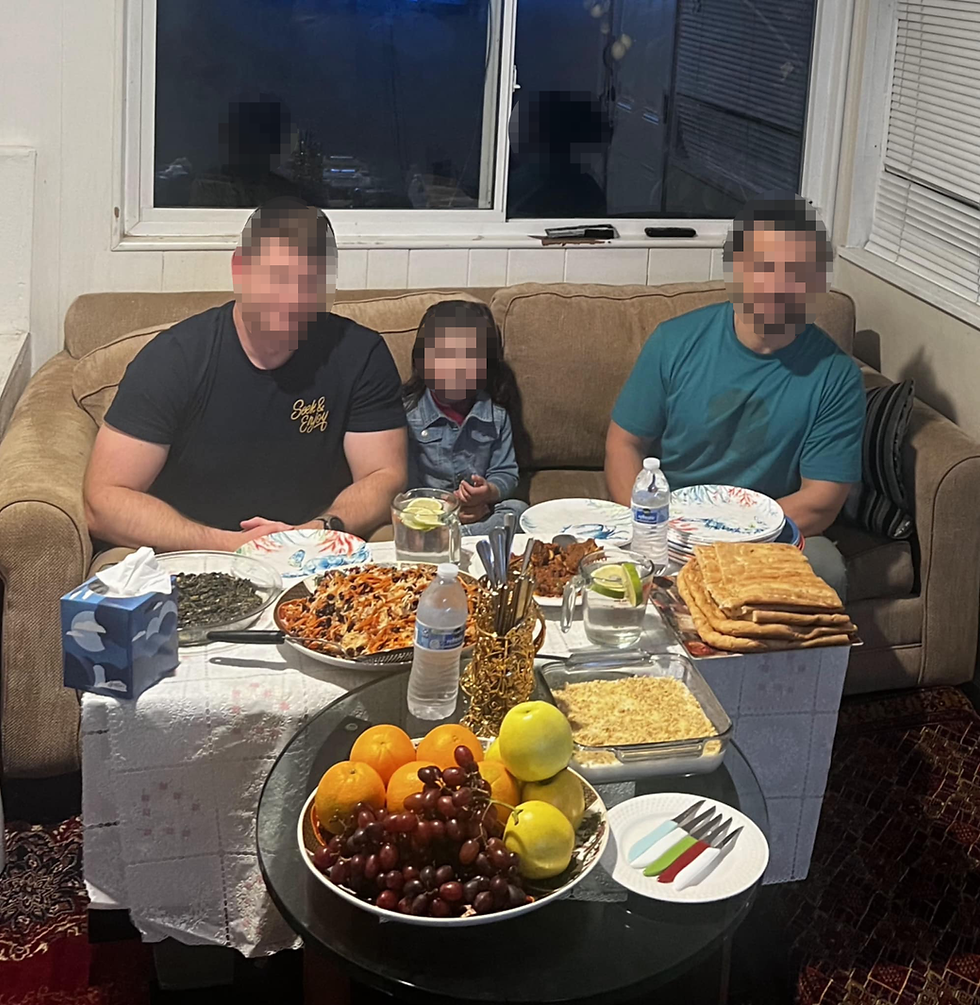
I want to highlight the important partnership between U.S. servicemembers and allies based on my perspective as a spouse of an active-duty U.S. Army officer who supervised contractors supporting U.S. Forces in Afghanistan. One particular Afghan national contractor demonstrates the trusted partnership that SIVs protect. This type of partnership was necessary for my spouse's work while he was deployed in Afghanistan. Working under my spouse's supervision as a Contract Manager, the Afghan contractor coordinated projects, monitored performance, and provided technical expertise alongside U.S. personnel. Additionally, this contractor supported mission-critical tasks during challenging conditions, including COVID uncertainties.
His service involved great personal risk, as Afghan allies were often targeted due to their
association with U.S. forces. Threats against him and his family are documented.
During the U.S. withdrawal in 2021, this contractor assisted U.S. personnel with translation and coordination at evacuation points, prioritizing the needs of others despite uncertainty for his own safety. His service illustrates the critical role local allies played in supporting U.S. operations and sustaining missions under dangerous circumstances.
The SIV provides a path for individuals like him to relocate safely to the United States.
This testimony reflects the professionalism, integrity, and the personal risk assumed while working with U.S. forces. Protecting him and other Afghan allies through the SIV program is necessary to honor the trust and partnership that made U.S. operations possible.
Time and reflection since my spouse’s deployment to Afghanistan have deepened my
understanding of how essential Afghan allies were to both my family and the mission my spouse served. As a military spouse, I saw how closely U.S. servicemembers depended on Afghan partners who worked beside them every day. These partnerships were built on trust, shared risk, and a common commitment under dangerous conditions. The Special Immigrant Visa (SIV) provides a framework to support these partnerships.
Bringing Afghan allies to safety is deeply personal. I know the risks they accepted by working with U.S. forces, and those risks did not end when American troops left Afghanistan. Many Afghan partners still face threats because of their past service and association with the United States. In many cases, prolonged SIV processing delays, not a lack of eligibility or commitment, have left them exposed to intimidation, persecution, and economic hardship. Some applications received tentative approvals months ago but stalled due to administrative and diplomatic barriers between Pakistan and Afghanistan. The suspension of U.S. visa issuance for Afghan nationals has further delayed these cases, leaving families without a path to safety. I hope for a day when all SIV-eligible family members can attend school safely and pursue their goals
without fear.
While my spouse and some contractors he worked with returned to safety in the United States, many Afghan allies and their families remain in danger. That contrast is not lost on me. Ensuring those who stood with U.S. servicemembers can reach safety honors the trust that defined these partnerships. The SIV program affirms that service and loyalty matter beyond the battlefield and reflects a responsibility to those who shared risk with U.S. forces.
Sincerely,
The spouse of an active-duty United States Army officer
Virginia
Statement for the Record
David Teska
Senate Judiciary Committee Hearing
Subcommittees on Border Security and Immigration and on Crime and Counterterrorism
January 14, 2026
I volunteered, as a DHS employee, to support Operation Allies Welcome in two sites in New Jersey, August to November 2021. I was first at the Camden Transition facility throughout its period of operation. Then I transferred to Ft. Dix and supported Camp Liberty which at its peak housed approximately 11,000 Afghan refugees.
What I remember most were the children who seemed to have relentless energy and were
constantly outside on good days playing, often with the young service members who ran the camp. The children came across as very resilient. Many left drawings depicting their feelings and appreciation of what the U.S. had done for them.
At Camden, I remember the looks on the faces of the people as they came off the bus from the airport in nearby Philadelphia. They showed a mixture of weariness, confusion, and sadness at having had to leave their homeland and make a long journey to a country most had only heard of. My colleagues, from across DHS and the military, were always compassionate and full of care for these people.
We felt (and I still do) we were doing the right thing helping them begin their journey to the U.S. When I checked in a family upon arrival, I always tried to say, “Welcome to the United States!” at the conclusion of the interview.
On a personal note, I remember, at age 11, my mother assisting with South Vietnamese orphan children flown by the U.S. Air Force from Saigon to Hawaii where we were living at the time.
I believe there were a lot of similarities with the predicament of the South Vietnamese and Afghans, both groups having supported the U.S. and who had to flee their country with their families or face years of imprisonment and possible death. Which is probably why the children I saw reminded me of the children my mother helped after the conclusion of another war.
Sincerely,
David Teska, Captain, USCGR (Ret.)
Kansas

Statement for the Record
Bryce Dressler
Senate Judiciary Committee Hearing
Subcommittees on Border Security and Immigration and on Crime and Counterterrorism
January 14, 2026
In the spring of 2012, my working relationship with local Afghan allies was tested under
sustained operational pressure. As part of a 24-hour air assault operation supporting the
1st Infantry Division, I worked alongside a newly assigned Afghan interpreter whose role
proved immediately central to the mission. The operation began with a pre-dawn insertion via CH-47 Chinooks and the establishment of a surveillance position in a contested area, relying heavily on intelligence developed through close partnership with Afghan personnel.
During the mission, improvised explosive devices were identified by Afghan National Army elements and safely disposed of by U.S. Air Force Explosive Ordnance Disposal. As conditions deteriorated, the unit came under rocket and small arms fire, followed by an unexpected desert storm that severely limited visibility and mobility. The weather disrupted aerial support and forced the ground element to adapt and hold position until conditions allowed for a safe exfiltration back to Forward Operating Base Andar.
Throughout the operation, the Afghan National Army and our interpreter remained mission-critical. Operating under constant personal risk, they enabled communication, cultural understanding, and real-time decision-making at every stage. Their composure and persistence allowed U.S. forces to operate effectively in an environment where
misunderstandings or delays could have had serious consequences.
In my role as a Low-Level Voice Intercept Operator, I could not have accomplished my
mission without this partnership. Unlike U.S. servicemembers, who undergo years of
training before deployment, our Afghan interpreters and allies were often thrust
immediately into combat environments with little margin for error, carrying risks that
extended beyond themselves to their families and communities. My safe return to the U.S. depended directly on their courage, judgment, and willingness to stand beside us under extraordinarily difficult conditions.
What stays with me most is the contrast between how I returned home and what our
Afghan allies were left facing. Near the end of my deployment, I was awarded the Army
Commendation Medal and the Combat Action Badge for my role across multiple missions that relied heavily on direct partnership with Afghan interpreters and local allies.
I returned home with medals, citations, and formal recognition of my service. Our Afghan
allies, many of whom had volunteered to stand beside U.S. forces under constant risk,
were requesting letters of recommendation from my commanders in the hope that those
words might help them find safety and freedom beyond the conflict they had been drawn or born into. That request has stayed with me. It was not an ask for reward or status, but for the chance to live once again live without fear—the same as us.
Bringing our Afghan allies to safety matters to me because their service contributions were unquestionably real, measurable, and indispensable. They operated in environments that required years of training from U.S. servicemembers, yet they were expected to adapt
immediately, often at great personal cost, not only to themselves, but to their families.
Their courage, judgment, and selflessness were foundational to mission success.
Ensuring the safety of our Afghan allies may be viewed by some as simply repaying a debt. I see it as an opportunity to honor partnership, integrity, and shared sacrifice, and to affirm that the values we ask others to uphold alongside us do not end when a deployment does.
When we consider the precedent we want to set, I believe in taking care of those who took care of us.
Sincerely,
Bryce Dressler, SrA United States Air Force, OEF 2011-12
California


